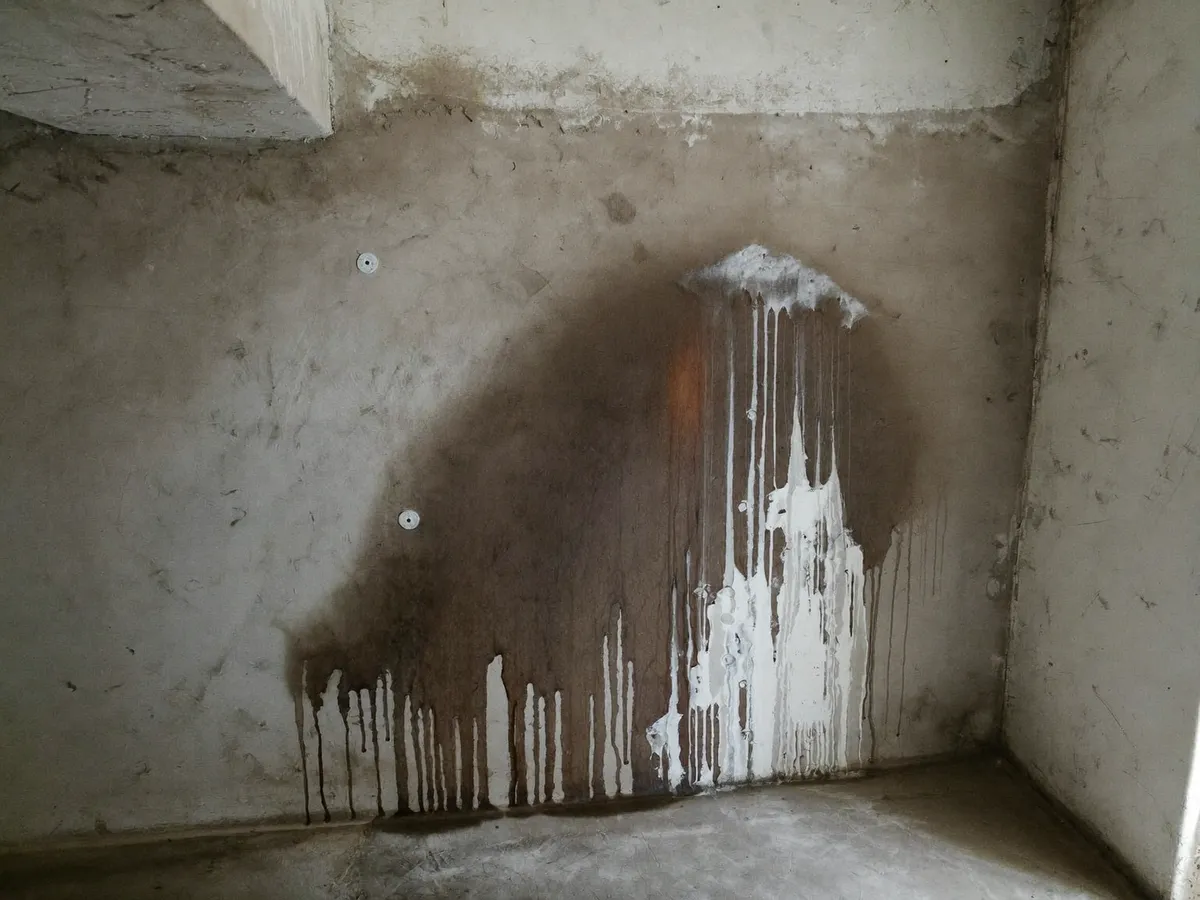
Short answer: below ground, water pushes from the outside, so a paint-on membrane on the inside face of a basement wall gets pushed off by the pressure it is meant to stop. Villa basements and retaining walls need negative-side systems that work inside the concrete — crystalline treatment — or drainage that takes the water away before it builds pressure, plus injection for any crack that is actively running.
Negative-side systems for villa basements and retaining walls
Crystalline Waterproofing
Crystalline admixtures or surface-applied crystalline slurries penetrate the concrete's capillary network and form insoluble crystals that block water passage permanently. They're particularly suitable for Bali basement and retaining wall applications because they work from inside the concrete mass — hydrostatic pressure from outside doesn't dislodge them. They also self-heal minor cracks as the crystals grow to fill new voids over time.
Drainage Board Systems
For walls with active water seepage, the most practical solution is often to accept that water will continue to penetrate the wall and manage where it goes. Drainage board — dimple-face sheet fixed to the wall face — creates an air gap between the wall and any internal finish. Water that enters through the wall runs down behind the drainage board to a perimeter drain and sump, rather than wetting the internal finish. Practical for occupied basements where structural waterproofing injection is impractical.
Injection Grouting
For active water flow through cracks in basement walls or slabs, polyurethane or acrylic injection resin injected through drilled holes stops the flow at the point of entry. The resin expands on contact with water and fills the crack. Effective for discrete active leaks in otherwise sound concrete — not suitable for porous concrete with distributed seepage.
Retaining Wall Waterproofing
Bali's sloped properties have extensive retaining wall systems. Retaining walls without waterproofing and drainage accumulate hydrostatic pressure behind them — a structural risk, not just a water ingress issue. We install drainage aggregate and drainage pipe systems behind retaining walls, combined with positive-side membrane on the retained face, where access allows.
Villa basements, sunken rooms and retaining walls on Bali's slopes
Much of Bali is built on slopes — Ubud's valleys, the cliff edges of Uluwatu, the terraced land around Canggu and Berawa. Wherever a structure sits below ground level on one or more sides, it carries hydrostatic pressure from the soil and groundwater behind it. In the wet season that pressure rises sharply, and any wall that was not waterproofed and drained correctly during construction will start to weep, show damp patches, or push white efflorescence salts through to the inside face. Left alone, that constant moisture corrodes reinforcement and, on retaining walls, becomes a structural risk rather than just a cosmetic one.
The fix is rarely a coat of paint or a surface membrane on the inside. Because the water comes from outside, the durable solution works with the concrete mass or manages where the water goes — crystalline waterproofing that becomes part of the slab, drainage boards that channel seepage to a sump, or injection that seals an active crack at source. We choose the combination based on whether the wall has a discrete leak or distributed seepage, and whether the outside face is accessible.
Drainage behind retaining walls on sloping villa plots
A retaining wall that holds back wet soil without drainage behind it carries the full weight of the water as well as the earth. Weep holes that stay dry in heavy rain, damp patches along the base of the wall and white salts on its face are the signs. Where we can reach the retained side — on new walls or during landscaping — we lay a drainage membrane against the wall, backfill with free-draining aggregate and run a perforated pipe along the footing to a discharge point, so rainwater never sits against the concrete. Where the retained side cannot be reached, we treat the wall from the accessible face with crystalline slurry, open or add weep holes and inject active cracks. The typical villa jobs are basement bedrooms and media rooms, plunge-pool plant rooms, sunken garden bathrooms and the terraced walls of hillside plots in Ubud, Uluwatu and the rice-field edges of Canggu and Berawa.
Our Below-Ground Process
Diagnose the water path
We establish whether you have an active crack leak, distributed seepage, or rising damp through the slab — each needs a different treatment.
Stop active flow
Any actively flowing crack is injected with reactive resin to halt the water before other work begins.
Treat the mass
Crystalline slurry is applied to seal the concrete capillaries, self-healing minor future cracks as the crystals grow.
Manage residual water
Where seepage cannot be fully stopped, a drainage board and perimeter drain direct water to a sump so internal finishes stay dry.
FAQ
Why does my basement wall keep getting damp even after waterproofing?
Almost always because a positive-side surface membrane was applied to the interior face. Below ground, water pressure pushes from outside and forces a surface membrane off the wall. These walls need negative-side solutions — crystalline systems or drainage boards — not an inside coat.
What is the white powder on my basement wall?
Efflorescence — salts left behind as water passes through the concrete and evaporates on the surface. It is a reliable sign that moisture is moving through the wall, confirming a below-ground approach is needed.
Can you stop an active leak in a basement wall?
Yes. For water flowing through a crack, injection resin is fed through drilled ports; it expands on contact with water and seals the crack at the point of entry. For widespread seepage we combine crystalline treatment with a drainage board and sump.
Basement and retaining wall waterproofing prices in Bali
| Service | Guide Price (IDR) | Notes |
|---|---|---|
| Crystalline treatment (per m²) | 280,000–420,000 | Two-coat system |
| Crack injection (per crack) | 650,000–1,200,000 | Polyurethane/acrylic resin |
| Drainage board system | by quote | Scope by wall area and access |
See the full pricing page or send photos of the damp wall for a quote.
Related Services
We also handle roof waterproofing, bathroom membranes and pool waterproofing across all our Bali service areas.
Below-Ground Water Ingress?
Describe what you're seeing — active drips, damp patches, white efflorescence deposits — and we'll advise the right diagnosis and treatment approach for Bali's conditions.
WhatsApp for Below-Ground Waterproofing