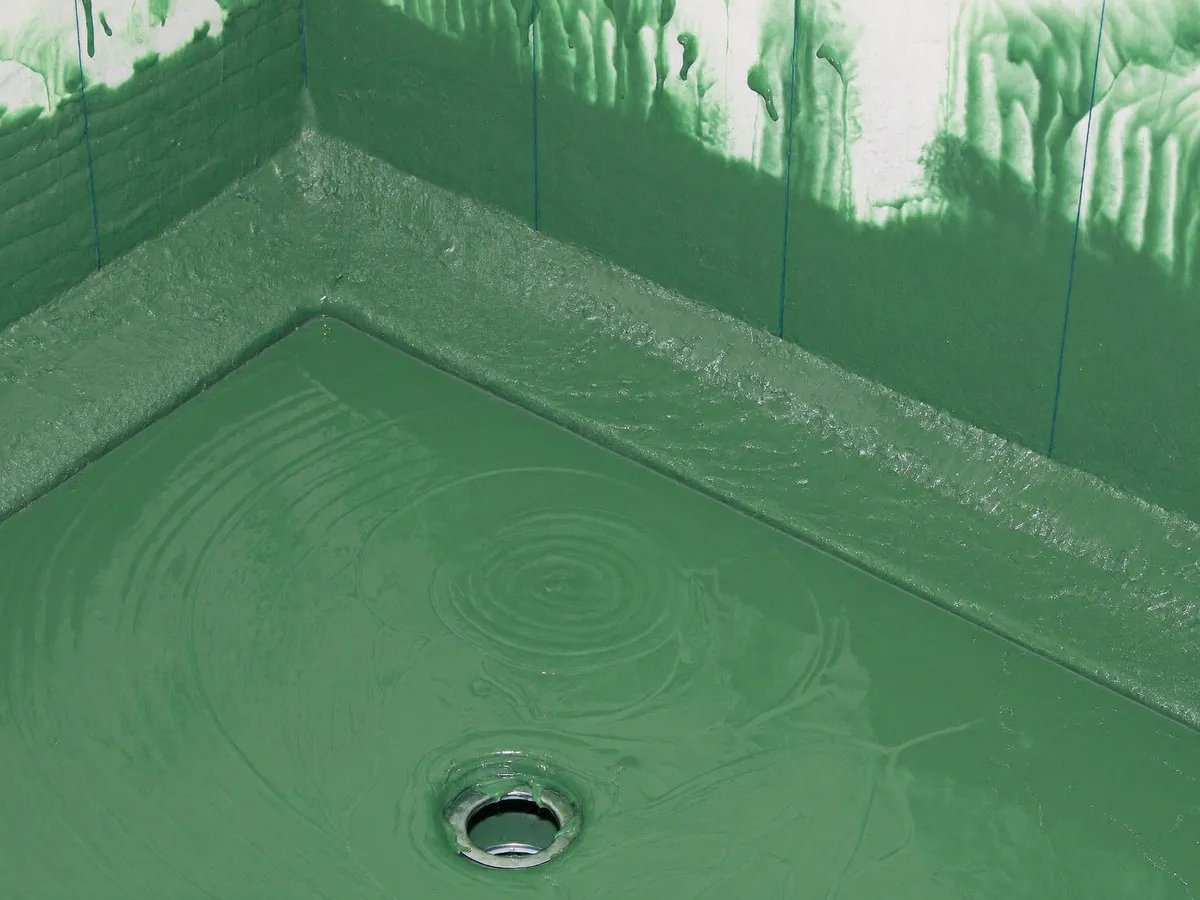
Imagine I'm called to a Seminyak villa where the ground floor ceiling has a persistent damp patch directly below the upstairs bathroom. The owner has re-tiled the shower twice in three years — the tiles keep coming off as the adhesive fails from moisture beneath. The actual problem, which had never been addressed, was a bathroom waterproofing membrane that was applied after the tiles on the original build — meaning it was applied over grout joints rather than to the clean concrete, and it was not turned up the walls behind the tile to a height above the shower head spray zone. Every time it rained or the shower ran, water tracked down through the grout, under the original membrane, and into the ceiling below. The third tile job didn't fix it. The correct membrane system behind a proper tile installation would have fixed it once.
Bathroom Waterproofing in Bali Villas
Wet Area Membranes
The Indonesian SNI standard for bathroom waterproofing requires membrane application to all floor surfaces and wall areas in the shower zone to a minimum height of 1.8m — the full height of the spray zone. In practice, most Bali villa builds apply membrane to the floor only, or to wall areas only 300–500mm above the floor. The result is water ingress at mid-wall height where the membrane doesn't reach.
Floor-to-Wall Junction Treatment
The cove joint between floor and wall is the highest stress point in bathroom waterproofing. Thermal movement and building settlement cause cracking at this junction before anywhere else. Correct treatment requires a flexible sealant cove bead at the junction before membrane application — without this detail, cracks at the junction compromise the membrane no matter how good the membrane product is.
Penetration Sealing
Every pipe, drain waste, and fitting penetration through the waterproofed slab is a potential failure point. Drain flanges need to be sealed into the membrane system, not just surrounded by it. Pipe penetrations need flexible collars, not rigid cement fill. These details are straightforward to do correctly on new construction and significantly more difficult to retrofit after tiling.
Remedial Waterproofing
Fixing bathroom waterproofing failures without full tile strip is possible in some cases — injection grouting through grout joints can fill voids behind membranes, and surface-applied crystalline systems can be introduced through the grout. These remedial approaches work for minor failures. For systemic membrane failure — large areas, active water ingress — stripping back to substrate is the only permanent solution.
FAQ
How do I know if my Bali bathroom has a waterproofing problem?
Signs: damp patches on the ceiling below an upstairs bathroom, tile adhesion failures (tiles coming loose), musty smell in the bathroom or ceiling space below, visible efflorescence (white salt deposits) on exterior walls adjacent to the bathroom. Any of these indicate water is getting behind the tile layer.
Can you waterproof a bathroom without removing all the tiles?
Sometimes. For localised failures — a specific corner or penetration — injection and patch repair can work. For widespread membrane failure, the tiles need to come off to access the substrate. We assess the extent of failure before recommending a remedial approach.
How long does bathroom waterproofing last in Bali?
A membrane applied correctly to a prepared substrate, turned up the walls above the shower spray zone and detailed properly at the floor-to-wall cove, will last the life of the tile installation. Failures almost always come from poor detailing or membrane applied over grout rather than to clean concrete, not from the product wearing out.
How We Waterproof a Bali Bathroom
Strip and assess
For remedial work, tiles and any failed membrane are removed back to the slab so we can see the real condition of the substrate and every penetration.
Prepare and cove
The substrate is cleaned and primed, and a flexible cove bead is run at the floor-to-wall junction — the highest-stress point in any wet area.
Membrane and penetrations
A two-coat flexible membrane is applied to the floor and up the walls past the shower spray zone, with drain flanges and pipe collars sealed into the system rather than around it.
Tile and test
Tiling goes back over the cured membrane. Where access allows, we flood-test before tiling so a failure is found on day one, not after the room is finished.
Bathroom Waterproofing Prices in Bali
| Service | Guide Price (IDR) | Notes |
|---|---|---|
| Remedial bathroom waterproofing (per bathroom) | 6,500,000–12,000,000 | Strip, treat, re-membrane; re-tiling is a separate line in the quote |
| New-build wet-area membrane (per bathroom) | 2,500,000–4,500,000 | Before tiling, scope by size |
Guide ranges only — message us a photo for a fixed quote, or see the full pricing page.
Related Services
Damp can travel — if the ceiling below is wet, the source may be the roof rather than the bathroom. We also handle pool waterproofing and below-ground systems across the same service areas.
Bathroom Water Ingress in Bali?
Describe what you're seeing — where the damp is appearing, how long, any previous repairs. We'll advise the correct approach.
WhatsApp Us