Waterproofing in Bali
Why Bali Needs Waterproofing Done Differently
Before the rains, October 2026: Bali's wet season usually arrives in November. Membranes need a dry substrate to bond, so October is the last comfortable window to strip and re-waterproof a flat roof or re-line a pool. Book a roof check now — send photos of drains, parapets and any ceiling stains on WhatsApp and we will tell you whether it is a detail repair or a re-do. See the pre-rainy-season roof checklist.
Waterproofing in Bali is not the same job it is in a temperate climate, and treating it as if it were is the single biggest reason villas here keep leaking. Our team works across Seminyak, Uluwatu, Sanur, Ubud, Canggu and all of south Bali, and almost every failure we are called to share the same root cause: a membrane that was correct on paper but wrong for tropical conditions, or applied to a substrate that was never properly prepared. Bali combines four stresses that most waterproofing systems are not designed to absorb at the same time — intense UV, salt-laden coastal air, a monsoon season that dumps months of rain in concentrated bursts, and a daily thermal cycle that swings a flat roof surface from below 25°C at night to over 70°C at midday. A rigid membrane that cannot bridge the resulting movement cracks within a few years, no matter how expensive the product was.
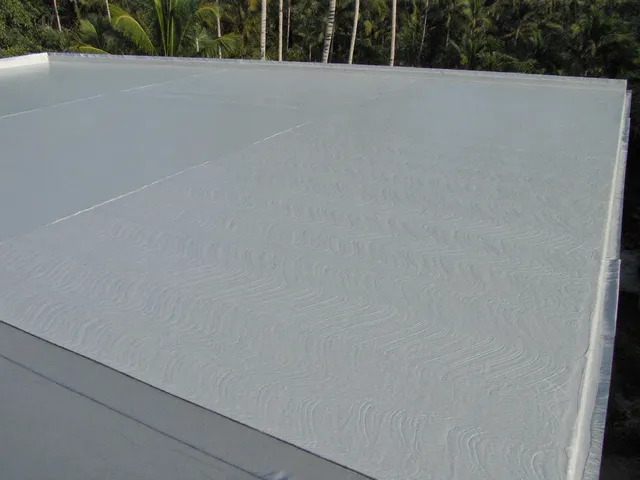
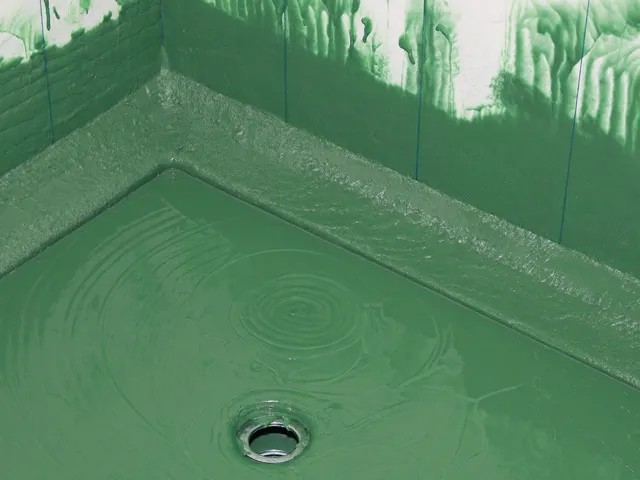
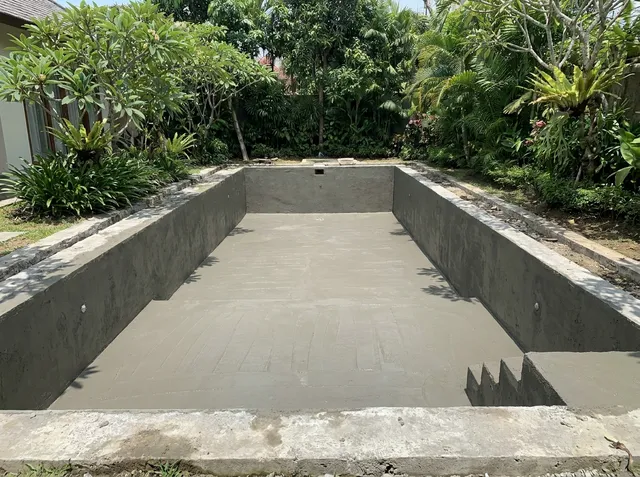
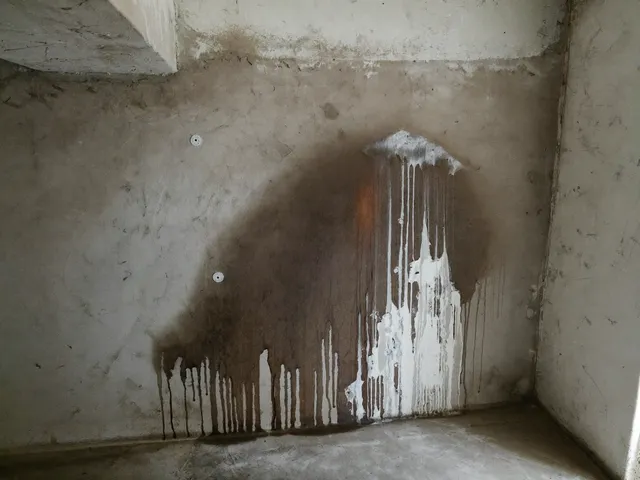
We specialise in four areas: flat roof waterproofing, bathroom and wet-area membranes, pool membrane and re-lining, and below-ground and retaining wall systems. For each, the correct product is different — polyurethane liquid membrane for complex roofs with many penetrations, crystalline systems for below-ground structures under hydrostatic pressure, flexible cementitious membranes behind tiled wet areas, and torch-applied bitumen sheet for large accessible roof fields. Choosing the wrong system is what turns a routine repair into a recurring problem, so we diagnose the actual failure mechanism before recommending anything.
The Most Common Bali Waterproofing Mistake
The most expensive mistake we see is applying a fresh membrane directly over a failed one. The owner sees water ingress, a contractor rolls a new coat over the existing surface, and it looks finished. Three months later the leak returns, often worse, because the new layer bonded to the old failing membrane rather than to the concrete substrate beneath it. When the old layer continues to delaminate, it drags the new one with it. The repair that actually holds means stripping back to clean, sound concrete, treating any cracks or movement joints, and only then applying a system matched to the application. It costs more up front and takes longer, but it is the difference between a five-year fix and a five-month one.
Drainage outlets and parapet wall junctions are the next most common failure points. On Bali flat roofs, the membrane field usually survives far longer than the detailing around drains, pipe penetrations and the perimeter where the membrane should turn up the wall by at least 150mm behind a counter-flashing. Many local builds omit that detail entirely. We assess both the membrane and the detailing, because re-coating the field while ignoring a failed drain collar simply hides the problem for one dry season.
How We Quote and Work
Every job starts on WhatsApp. Send us a few photos of the damp patch, the roof, the pool waterline or the basement wall, tell us your area and roughly how long the problem has been there, and we will usually tell you the likely cause and an indicative price range before anyone visits. For straightforward repairs we quote up front; for larger remediation we confirm scope on a short site visit so there are no surprises on the invoice. We document work with before-and-after photos and use materials specified for Bali's UV, salt and rainfall load. Guide pricing for every service is published openly on our pricing page, and our short guides and articles explain how to identify what is actually going wrong with your roof, bathroom or pool.
Before You Book: FAQ
How long should waterproofing last in Bali? A correctly specified and properly applied system — polyurethane, modified bitumen or crystalline — should last 10–15 years in Bali's conditions. Systems applied over failed membranes or onto poorly prepared substrates often fail in under three years. Preparation matters as much as the product.
How do I prevent roof leaks in the rainy season? Preventing roof leaks in the Bali rainy season starts in the dry months: clear outlets, re-seal penetrations, and renew the membrane before cracks open. Waterproofing a concrete flat roof follows the same best practice — primer, two coats, reinforced corners (the service locals book as jasa waterproofing atap or jasa perbaikan atap bocor).
How is waterproofing priced per m²? The harga pasang waterproofing per m2 depends on system and substrate: exposed polyurethane on a concrete deck (jasa anti bocor dak beton) prices differently from a tiled bathroom re-seal. We measure, test moisture, and give one fixed per-m² rate in writing.
Can you waterproof during the rainy season? Most membranes need a dry substrate to bond, so we schedule major roof and pool work in the dry season (roughly April–October) or work within forecast dry windows. Emergency leak containment can be done year-round; full re-waterproofing is planned around the weather.
Do you cover my area? We serve all of south and central Bali — Uluwatu, Nusa Dua, Seminyak, Jimbaran, Denpasar, Canggu, Sanur, Ubud, Berawa and Kuta. Message us your location to confirm a visit time; most south Bali areas can be reached within a few hours for urgent issues.